
Personal-loan P2P lending is often described as an alternative investment, but in practice, it represents something more specific. It lies between traditional finance and direct lending, allowing investors to earn interest by funding consumer loans outside the banking system. Unlike bank deposits, bonds, or stocks, returns are driven not by market prices, but by how well loans originated, managed and repaid over time.
This makes personal-loan P2P investing returns attractive, yet outcomes depend on multiple factors beyond the headline interest rate. Understanding how these elements interact is essential for anyone considering this asset class.
Today, we’d like to share how we view personal loan P2P investing based on our experience, and how hive5 fits into the broader P2P landscape alongside other platforms.
Why Personal Loans in P2P Often Offer Higher Interest Rates
Personal loans are usually unsecured, short to medium-term and issued to a wide borrower base. Compared with real estate investments or secured business lending, they usually carry higher nominal interest rates to reflect higher operating costs and a wider range of borrower profiles.
However, investors should also remember that some P2P platforms, especially those without buyback obligations or other guarantees, could offer higher interest rates. The truth is, these platforms often come with less predictable cash flows. In such cases, defaulted payments are a usual part of the investment experience.
One of the key understandings for investors should be that the highest interest rates are not always equal to the realised return. Actual performance depends on how efficiently a portfolio is originated and managed.
Understanding the Main Risks in P2P Personal Loans
Many investors think the main risk in P2P personal loans is borrowers' repayment on time. In practice, investment results depend on more than just individual borrowers. They are influenced by how loans are approved, how risks are assessed, and how consistently these decisions are applied over time.
Even loans for similar borrowers can perform differently. it depends on the loan originator’s management and protections, such as buyback obligations. For this reason, many investors diversify across platforms, especially those that offer buyback obligations, like hive5, to achieve more predictable results rather than focusing solely on returns.
Structural and Operational Factors
Beyond borrower-level risk, investors are also exposed to structural and operational elements of the P2P model. In many setups, this includes indirect exposure to the loan originator itself. The originator’s financial stability, funding mix, and operational resilience become especially relevant.
Just as important are the platform's and the loan originator's management. Governance, ownership, decision-making, and risk oversight all impact long-term results, yet are not always disclosed. Platforms that clearly communicate management structure, risk controls, and reporting tend to inspire greater confidence and predictability.
Finally, investors should also think about how easily money can be reinvested. Always keep in mind that unused cash in the account can gradually reduce actual returns.
How Investors Should Evaluate Returns
To understand if returns are attractive for the risk taken, investors should look beyond headline marketing figures and focus on a few practical principles:
- Net returns over time, rather than short-term snapshots or promotional averages
- How do loans issued in different periods perform, which helps show whether lending decisions remain reliable over time
- Clear and transparent reporting on late payments, loan performance, and recovery progress
Platforms that make these elements visible and comparable allow investors to better understand what truly drives long-term returns. This is also where structural choices made by a platform become particularly important.
Hive5 in the Context of P2P Lending
In this context, we position ourselves as a platform operating within a clearly structured, integrated model. As part of the Hive Finance Group, we list loans originated by group-owned lending companies. It lets us offer investment opportunities directly to active, ongoing lending operations rather than relying solely on an open marketplace.
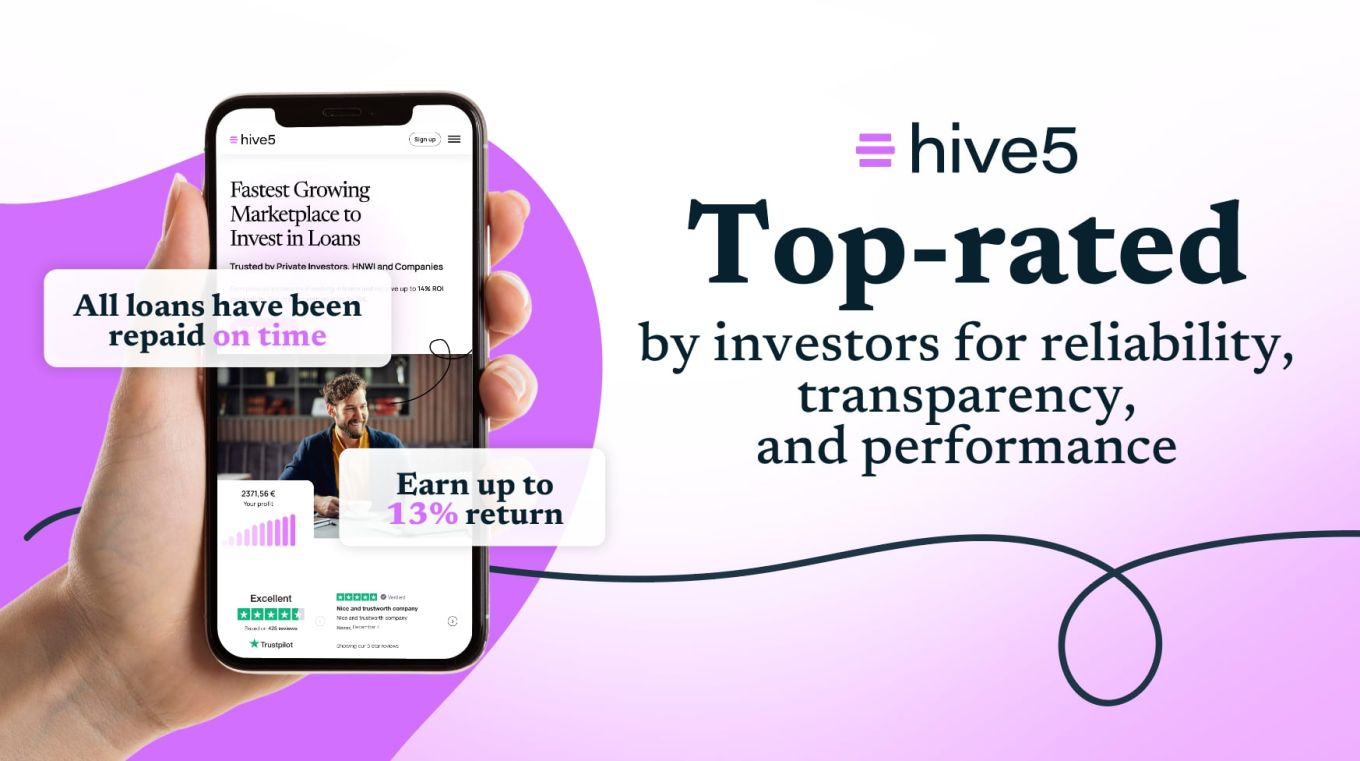
From a return perspective, hive5 offers a key advantage through fixed interest rates and a clearly defined investment structure. When an investor commits to a loan with a 13% return, the expected outcome is known in advance - there are no sudden drops in value, no dependence on stock market volatility, and no exposure to speculative price swings. This predictability is supported by our internal risk management policies and the buyback guarantee. As part of this strategy, we have applied a zero-late-loan policy to provide stable, predictable cash flows over time.
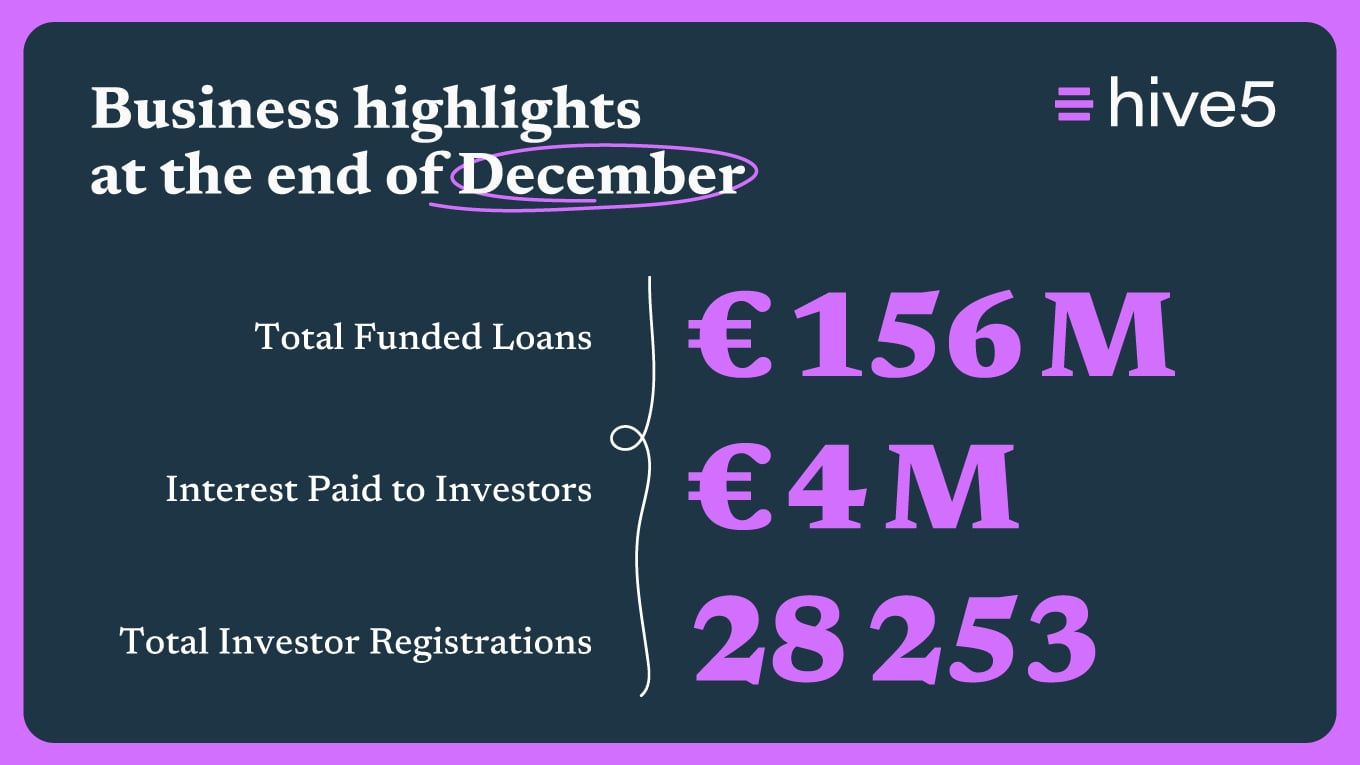
Historically, investors on the platform have earned average returns of around 15% (as of December 2025). It again shows the platform's structural measures that sustain consistent performance.
Finally, transparency remains the key focus for us. Investors have access to real-time portfolio data and detailed reporting, as well as monthly platform reviews. The transparent communication allows them to assess performance over time. These elements enable investors to understand not only the potential returns but also the whole picture.
The Importance of Diversification in P2P Investing
The fact is that the one principle that remains consistent across all forms of investing is the diversification of your portfolio. In P2P personal lending, this principle is particularly relevant because cash flows can vary across borrowers, loan originators, platforms and market conditions.
Modern Portfolio Theory (MPT) shows that diversification across assets with different risk profiles can reduce portfolio risk without lowering returns. In practice, investors should spread their investments across loan types, geographies, and platforms rather than concentrating in one area.
For example, some investors choose to invest a limited portion of their portfolio, such as a single-digit or low double-digit percentage, in P2P lending and then diversify that exposure across several platforms and loan structures.
Ultimately, diversification decisions should be made based on an investor’s individual risk tolerance. Investors typically perform better after gathering information from multiple sources and consulting a qualified financial advisor before making investment decisions